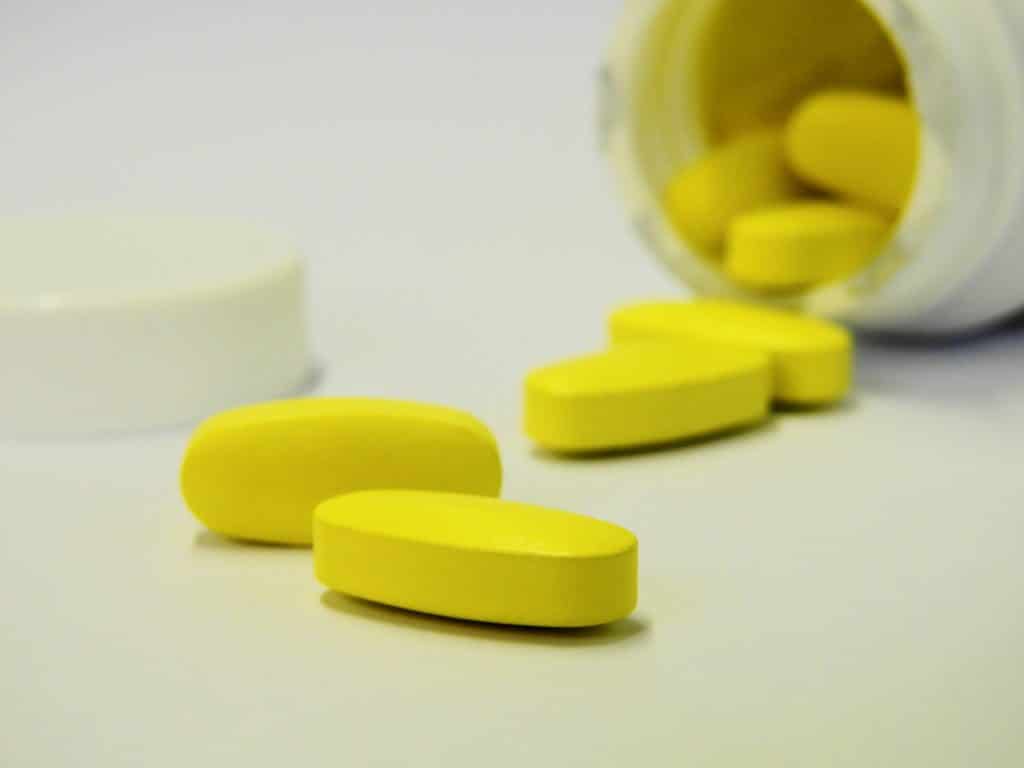
<p>If you&#8217;ve just gotten on a new multi-vitamin or a B-complex supplement, you may have noticed a considerable change in your urine color &#8211; possibly to a bright neon yellow color.</p>
<p>While this may cause some concern at the beginning, it really isn&#8217;t something you need to worry about. The color is caused by Riboflavin (also known as B2). Its just your body getting rid of excess riboflavin that it didn&#8217;t need and is not entirely a bad thing.</p>
<h3>What is Riboflavin?</h3>
<p>Multi-vitamins and most B-complex supplements contain the vitamin B2, also known as Riboflavin. Riboflavin is one of 8 B-vitamins that are good for your health. B2 or Riboflavin is a vitamin that helps maintain healthy red blood cells, aids in giving your body more energy, acts as an antioxidant and assists in the general health of your eyes, skin and growth. ; Riboflavin is essential to assist in breaking down proteins, carbohydrates and fats as well as helping to give your body energy. With Carbohydrates, riboflavin acts as a ;co-enzyme to help your body release energy from the carbohydrates. It also helps break down amino acids and fatty acids.</p>
<h3>Why the Neon Yellow Colored Pee?</h3>
<p>Riboflavin is a water-soluble vitamin. What this means, is that the body doesn&#8217;t store the vitamin and just releases it into your system to get rid of excess amounts on a daily basis. Fat-soluble vitamins like A, D, ;E, and K are stored in your body for future use, whereas your body uses as much water-soluble vitamins as it can, then removes the excess.</p>
<p>Riboflavin itself is a yellow or orange color. So when your body gets rid of excess riboflavin, it comes out in your urine and adds a yellow color to your urine.</p>
<p>The intensity of the neon yellow depends on the amount of riboflavin your system doesn&#8217;t need, and how much water you&#8217;re drinking &#8211; the more water you&#8217;re also getting rid of, the less intense the yellow.</p>
<p>More Science: If you really want to know why riboflavin turns pee yellow, Riboflavin itself absorbs blue light (around 450nm), making yellow more predominant.</p>
<h3>Am I Wasting Vitamins (aka Money) Then?</h3>
<p>The recommended daily intake of B2 or Riboflavin is 1.3 milligrams (mg) daily for men and 1.1 milligrams daily for women aged 19 years and older (<a href="https://www.nap.edu/read/6015/chapter/7#109" target="_blank" rel="noopener noreferrer">source</a>). Most B2 supplements contain about 100mg of riboflavin, which is very excessive based on what you need daily. While overuse isn&#8217;t necessarily harmful, it is essentially wasting your money.</p>
<p>In multi-vitamins that contain B2, normally there is about 25mg or so of riboflavin, so a good amount less but still more than you need. Having a bit more than needed isn&#8217;t a problem, and helps ensure your body absorbs the needed amount, but unless you have a B2 deficiency, the straight up B2 Vitamin isn&#8217;t necessary, and going with a <a href="https://amzn.to/2lL1IXz" target="_blank" rel="noopener noreferrer">B-Complex</a> (multiple B vitamins in one) may be the better way to not waste your money.</p>
<h3>How Can I Absorb B2 (Riboflavin) Better?</h3>
<ol>
<li>Riboflavin is absorbed in the upper part of the small intestine and is better absorbed when taken with food. The percentage of absorption when taken alone is only 15%, while with food the absorption percentage jumps up to 60%.</li>
<li>Another great way of ensuring your Riboflavin intake/absorption is good is just making sure you eat foods that contain it. Foods like liver, organic meats, seaweed and almonds are great natural sources of B2, and being natural foods, they have a better absorption rate than supplements.</li>
<li>Take a B-Complex supplement instead of individual vitamins. The B vitamins work well together, and aid each other when taken together. This makes sense as you don&#8217;t want to be taking excess vitamin B2 and not have enough B3, B6 or B12 to help out. Actually, B2 is required to help ;mobilize Vitamin B6 ;and folic acid.</li>
</ol>

Why Do B2 Vitamins Make Your Pee Change Color?