
<p>I first started wondering about how long after a drink of water does it take to enter the body’s system after realizing I was feeling dehydrated and was about to go play volleyball. I didn&#8217;t know if drinking a glass of water right then would help when I was about to play a sport an hour later. I know that you should drink ’8 glasses a day’, but if you’re feeling dehydrated, or if you just worked out and your muscles were feeling fatigued, how long does it really take for that first mouthfull of water to help?</p>
<h3>Lots of Factors</h3>
<p>Well it turns out the answer varies greatly depending on a lot of conditions. Water can literally start entering your system within seconds, on a more localized level, starting in your mouth. Then the majority of water is absorbed in the small intestine, after being let out of the stomach.</p>
<p>But here is where the aforementioned ’conditions’ are in play. If you drink water on an empty stomach, it can pass through the stomach into the small intestine and enter your bloodstream within 5 minutes (faster if the water is colder, compared to warm!).</p>
<p>If you’re eating while drinking the water, you may have to wait upwards of <strong>45 minutes</strong> before the water is passed into the intestines because the stomach must digest the food first.</p>
<p>Overall, on average, it takes from <strong>5 minutes to a total of 120 minutes</strong> for water to fully absorb into your bloodstream from the time of drinking. The University of Montreal did a study poetically called “<a href="http://www.ncbi.nlm.nih.gov/pubmed/21997675" target="_blank" rel="nofollow noopener noreferrer" shape="rect">Pharmacokinetic analysis of absorption, distribution and disappearance of ingested water labeled with DâO in humans</a>.” which has graphs and timelines explaining their study if you like that kind of stuff.</p>
<p>A study in 2013 published in the &#8220;Journal of Strength and Conditioning Research&#8221; showed that the body can go from various levels of dehydration to re-hydrated with only 600ml of water within 45 minutes. Note that this study was done with subjects aged 25, so age could be a factor that determines the timing. Overall, they found that the <strong>45 minute mark</strong>, and the 600ml amount were the average.</p>
<h3>You can only absorb so much water</h3>
<p>There have also been studies that show over-drinking is an issue, especially in cases of strenuous activity like marathons. On average, the <strong>body can only absorb 400-600ml per hour</strong>, so drinking more than that is just a waste. When people in extreme activities drink more than what their body can handle per hour, they can actually cause more issues than help.</p>
<p>This doesn&#8217;t mean that if you suddenly guzzle a litre of water you&#8217;ll hurt yourself. For the most part, you&#8217;ll find that you will have to use the bathroom within the hour and lose the water quickly in your urine. But if you drink excessive amounts continually, your body won&#8217;t be able to handle it, your cells will become bloated and low in salt and other nutrients, and systems can start having issues.</p>
<h3>Slow and steady is key</h3>
<p>So what to take from this? When you’re very thirsty and somewhat dehydrated, especially after something like cardio-heavy sports, drink water first (somewhere between 400ml and 600ml maximum in one sitting) then give your body at least <strong>5 minutes before you eat</strong>, or else your body will be dehydrated longer. The real trick is to just drink enough water consistently throughout the day to stay hydrated, instead of guzzling when you&#8217;re very dehydrated.</p>
<p>On a side note, not all water you drink is fully absorbed into your system, especially if you drink a lot of water. Much of it is flushed out in your urine, and some in your stool. If you want an interesting read on water’s involvement in your bowels, the University of Michigan has a <a href="https://medicine.umich.edu/sites/default/files/content/downloads/bowel-function.pdf" target="_blank" rel="nofollow noopener noreferrer" shape="rect">Bowel Function Anatomy</a>.</p>
<p>Learn more from Dr. F. Batmanghelidj who writes about how in many cases in life, if you&#8217;re sick, <a href="http://www.amazon.com/gp/product/0970245882/ref=as_li_qf_sp_asin_il_tl?ie=UTF8&;camp=1789&;creative=9325&;creativeASIN=0970245882&;linkCode=as2&;tag=trthwohq05-20&;linkId=YPM67VANCPXYKID7" target="_blank" rel="noopener noreferrer">your body doesn&#8217;t need medication, just water</a>.</p>

How long does it take to absorb water into the body?
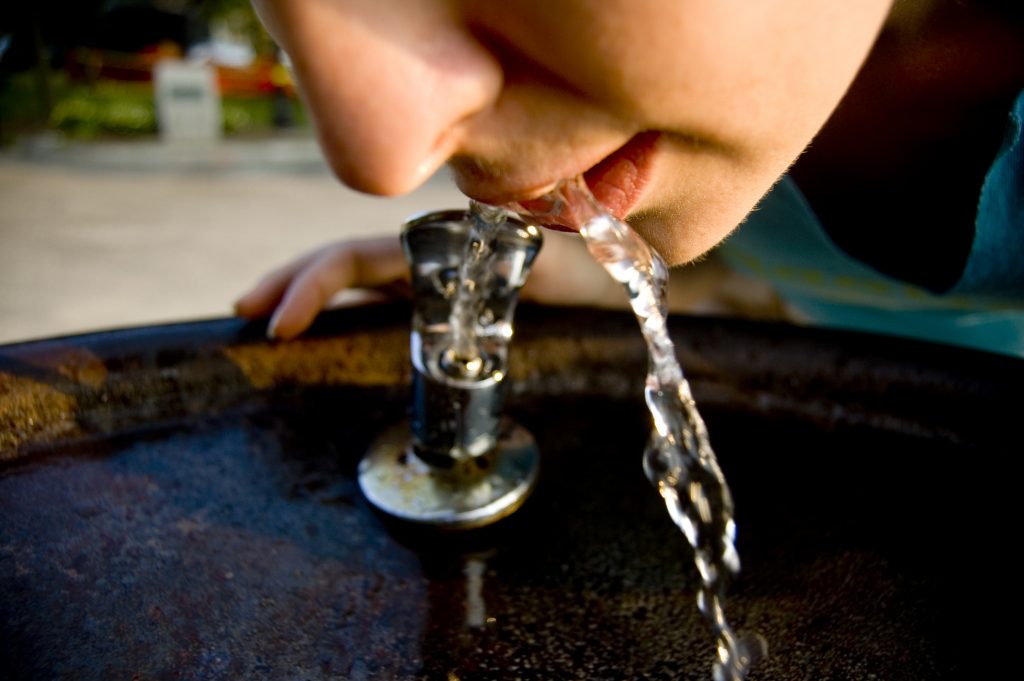
Photo: David Salafia